
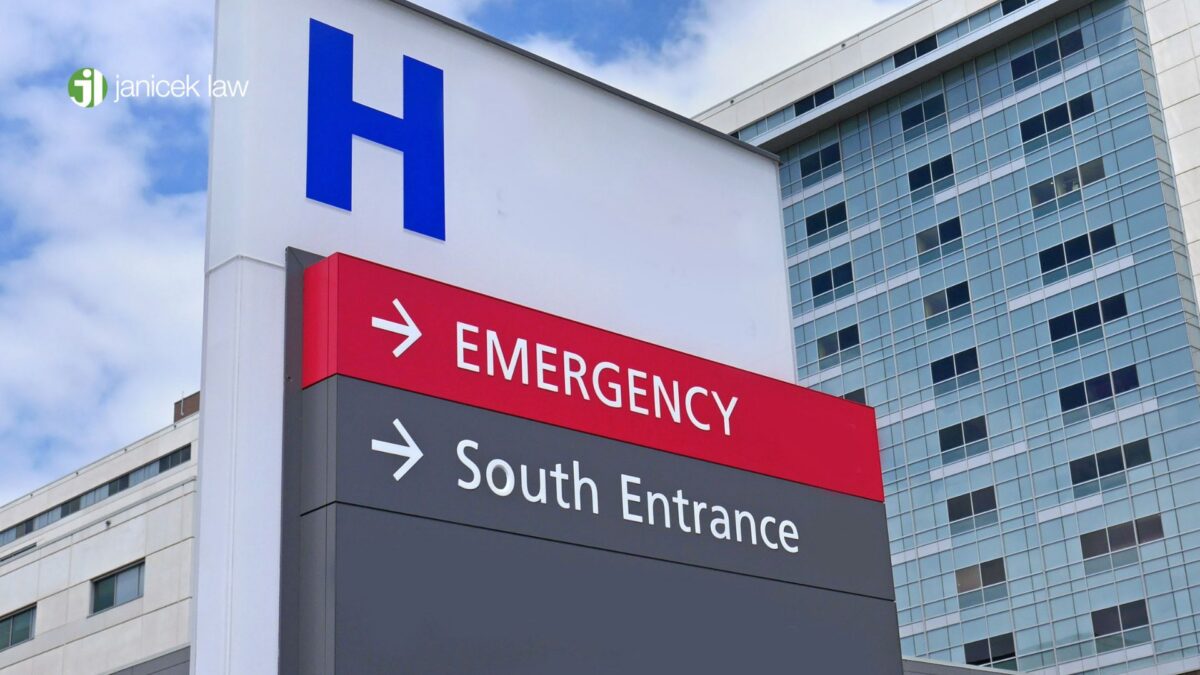
It seems like everyone you know has some kind of horror story about medical care gone wrong. That isn’t a coincidence: a widely cited Johns Hopkins analysis published in the BMJ estimated that medical errors rank as the third-leading cause of death in the United States, behind only heart disease and cancer. Despite that, the Texas hospital incident reporting system built to catch dangerous doctors remains inconsistent at best.
What the National Practitioner Data Bank Was Supposed to Fix
Congress opened the National Practitioner Data Bank (NPDB) in 1990 to stop incompetent or dangerous physicians from quietly moving from hospital to hospital, or state to state, without anyone catching on. Under federal law, hospitals must report to the NPDB any time they revoke, suspend, or meaningfully restrict a doctor’s clinical privileges for reasons tied to competence or conduct.
Over 24,000 hospitals, medical boards, and healthcare entities nationwide are supposed to use the database before hiring or credentialing a physician.
However, in practice, around half of the nation’s hospitals have never filed a single report with the NPDB since it opened well over thirty years ago.
That’s not a statistical fluke for a handful of hospitals. What’s worse, the lack of Texas incident reporting seems to be the norm. Additionally, the state has some of the worst offenders in the country.
Why Texas Hospitals Don’t Report Bad Doctors
An investigation by Dallas television station WFAA found that two out of three Texas hospitals have never reported a physician to the NPDB. Surprisingly, this rate is worse than the national average. Attorneys interviewed for that investigation pointed to a mix of legal loopholes and institutional self-interest. What they didn’t point to was a genuine absence of bad doctors in Texas hospitals.
The most commonly cited loophole is timing. Federal reporting rules are triggered when a hospital restricts a doctor’s privileges for over 30 days. Some hospitals intentionally limit a physician’s discipline to 29 days. Other hospitals quietly let doctors resign while investigations are pending, specifically to stay under that threshold.
A 2024 Georgia Law Review analysis of hospital reporting practices concluded that hospitals are intentionally circumventing NPDB reporting duties to avoid institutional embarrassment, liability exposure, and friction with physicians who bring in revenue. This dynamic has only intensified. Roughly three out of four physicians in the U.S. now work as hospital employees as opposed to being independent practitioners.
Fear of liability plays a role too, even though it is largely unfounded. Hospitals and peer review committees carry substantial federal immunity for good-faith peer review, credentialing, and reporting decisions. Malpractice attorneys who track NPDB compliance say hospitals often cite malpractice lawsuit risk as a reason not to report bad doctors in Texas. However, in reality, the bigger driver is a straightforward business calculation: keeping a revenue-generating physician on staff and keeping the hospital’s own track record looking clean. Corporate greed.
Texas Hospital Reporting Bar is Lower & Hospitals Still Miss It
Texas has its own reporting statute layered on top of the federal one, and it is actually stricter. Under Texas Occupations Code Chapter 160, Section 160.002, a hospital’s medical peer review committee must report to the Texas Medical Board any adverse action affecting a physician’s clinical privileges for over 14 days. That’s half the federal window.
Texas hospitals are also required to report when a physician surrenders privileges while under investigation, or in exchange for the hospital dropping an investigation altogether. This closes off the same resignation loophole that undermines federal reporting.
The Texas Medical Board itself has publicly flagged this as an enforcement problem. In its own bulletin, the board noted that when hospital medical staff fail to report, or allow a physician to resign ahead of a peer review investigation specifically to avoid a report, the board loses the ability to investigate and discipline a licensee who may be leaving patients at risk.
It‘s also not fair to say hospitals face zero consequences for failing to report federally. Hospitals that substantially fail to report are supposed to have their names published in the Federal Register. These facilities can lose liability immunity for peer-review activities for 3 years.
However, in reality, this penalty is rarely enforced. To date, not a single hospital has faced any meaningful consequences for non-reporting in the NPDB’s history. In our opinion, this is precisely why the most common hospital incident-reporting loopholes have persisted for over 30 years with little real deterrent effect.
The “Dr. Death” Case Shows What the Lack of Texas Hospital Incident Reporting Has Cost
The consequences of this system are not hypothetical. Dallas neurosurgeon Christopher Duntsch, known in news coverage as “Dr. Death,” moved between multiple Texas hospitals, performing spinal surgeries even as hospital staff raised alarms about him.
By the time he was finally stopped, he had left a trail of surgical error lawsuits on behalf of patients paralyzed, maimed, or dead. “Dr. Death” is now serving a life sentence. His case became the textbook example of how a fragmented, poorly enforced hospital incident reporting system lets a dangerous physician keep operating on unsuspecting patients simply by changing employers.
Patients Can’t Check the Data Bank for Texas Hospital Reporting Themselves
Even where hospitals do report, the NPDB offers Texas patients little direct protection. The database is not open to the public. Only hospitals, state licensing boards, and a narrow set of other authorized entities can query it. Even those professionals generally cannot see a physician’s name directly. They receive a report tied to a specific practitioner they are already vetting.
A patient in San Antonio, Houston, or anywhere else in Texas cannot look up a doctor and see whether that doctor has ever been reported to the NPDB, no matter how serious the underlying conduct was. We are now potentially seeing a similar case play out with Sono Bello lawsuits across Texas.
That gap matters most in a state like Texas, where hospital systems span huge geographic areas, and it is common for patients to see a specialist, surgeon, or hospitalist they know almost nothing about. Bexar County alone is served by several large hospital systems, and a physician disciplined at one facility can often still hold privileges, or find new privileges, at another nearby.
What Patients Can Do to Protect Themselves From Bad Doctors in Texas
Because hospital incident reporting cannot be relied on to flag a dangerous doctor before you ever meet one, the practical burden falls on patients to do their own homework. The Texas Medical Board maintains a public license lookup that shows formal disciplinary actions, board orders, and license status for any physician licensed in the state. It’s a more accessible starting point than the NPDB.
Patients considering surgery or a high-risk procedure can also ask directly about a physician’s board certification, hospital privileges, and any history of formal discipline.
Even a careful patient can still end up the victim of a physician, or a hospital system, that concealed a documented pattern of negligence. When that happens, the legal system, not the NPDB, becomes the tool that can actually hold a hospital or doctor accountable.
A San Antonio malpractice attorney can build a claim based on the hospital’s own peer review history, staffing decisions, and hiring failures.
If You Were Harmed by a Doctor a Hospital Should Have Reported
If you or a family member were injured by a physician who had a documented history of prior discipline, prior malpractice claims, or prior privilege restrictions elsewhere, that history can become central evidence in a malpractice case, even though you could never have found it yourself beforehand. An experienced San Antonio hospital malpractice attorney can subpoena credentialing files, peer review records, and prior hospital employment history that patients have no independent way to access, and use them to show a pattern the hospital knew about and chose not to report.


 Español de México